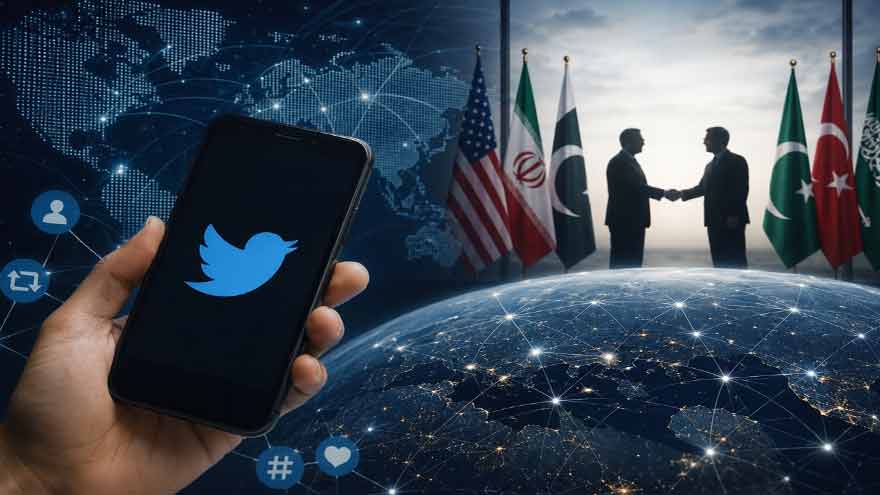
Summary Social media is becoming a key diplomatic tool as governments and leaders use digital platforms to communicate foreign-policy positions, respond to crises and shape global opinion.
ISLAMABAD (Zeeshan Yousafzai) – Social media platforms have increasingly emerged as a new channel for diplomatic communication, with governments, foreign ministries and world leaders using digital platforms to announce foreign-policy positions, respond to international developments and communicate directly with global audiences.
The growing practice, known as digital diplomacy or social-media diplomacy, is changing the way states communicate. While diplomatic letters, confidential cables, official notes, ambassadorial meetings and formal statements remain important, social media has introduced a faster and more public method of delivering diplomatic messages.
The recent US-Iran conflict provided a prominent example of the growing role of digital diplomacy. Following the start of the conflict on February 28, several important statements and announcements by US President Donald Trump were communicated through Truth Social and Twitter, allowing his positions to reach audiences around the world almost immediately.
Iranian officials also relied on social media to communicate Tehran’s position during the conflict. Statements issued online addressed issues including the Strait of Hormuz, ceasefire conditions and regional security, demonstrating how digital platforms can be used to communicate positions on sensitive diplomatic and security matters.
The use of social media has introduced a major change to the traditional diplomatic process. In conventional diplomacy, governments often spend significant time negotiating the wording of official statements because individual words can carry political and legal consequences.
Relations between states have traditionally been managed through diplomatic correspondence, confidential cables, official notes, meetings between ambassadors and joint communiqués. Although these channels continue to operate, social media now allows leaders and senior officials to communicate their positions publicly without waiting for lengthy diplomatic procedures.
The role of digital diplomacy has also extended beyond political communication. Information released by political leaders through social media can affect international markets, particularly during conflicts or periods of uncertainty. Statements suggesting progress in negotiations can influence investor expectations, while threats of further military action can increase concerns about energy supplies and commodity prices.
The use of social media as a diplomatic tool is not entirely new. During his first presidency, Donald Trump frequently used Twitter to communicate his positions on North Korea, China, Iran and other foreign-policy issues. His posts often triggered immediate reactions from governments, political leaders and international media.
Pakistan has also increasingly used digital platforms to communicate diplomatic and security developments. The Makkah Joint Defence Agreement between Pakistan, Saudi Arabia and Türkiye provided another example of how major international agreements and their key messages can be communicated through social media.
The agreement was signed on August 7, 2026, with the three countries agreeing to strengthen cooperation in defence and security. Senior Pakistani officials subsequently used social media to communicate details and explain the purpose of the agreement.
Prime Minister Shehbaz Sharif also posted about the agreement on X, describing it as a symbol of friendship and a shared commitment to peace and security among the three countries.
Deputy Prime Minister and Foreign Minister Ishaq Dar later clarified that the defence agreement was defensive in nature and was not directed against any country. He also said the agreement could remain open to other regional countries willing to uphold its principles.
Reactions to diplomatic developments can now also emerge rapidly through social media. Statements by government officials, political figures and individuals with close links to political leadership can attract international attention and become part of wider diplomatic discussions.
The increasing use of social media has therefore changed the speed at which diplomatic messages travel. A statement from a president, prime minister or senior official can reach millions of people within minutes and can quickly become the subject of international news coverage.
However, the rapid nature of digital communication also presents challenges for diplomacy. Unlike traditional diplomatic correspondence, social media posts can be issued and circulated almost instantly, leaving limited time for governments to consider the possible political or diplomatic consequences of particular statements.
Despite the growing role of digital platforms, traditional diplomacy continues to remain important. Confidential negotiations, formal correspondence, ambassadorial meetings and closed-door discussions continue to provide governments with channels for sensitive diplomatic engagement.
Social media, however, has become an additional instrument of international relations. Governments can now use digital platforms not only to communicate with their own populations but also to address foreign governments, international organisations and global public opinion.
The emergence of digital diplomacy marks a significant change in international communication. Diplomatic messages that once travelled through official documents and diplomatic channels can now be delivered through a single post, making social media an increasingly important part of modern diplomacy.