


UN chief Guterres raises concerns about instability in Venezuela, legality of US operation
World
"I am deeply concerned about possible intensification of instability in the country, potential impact on the region, and precedent it may set for how relations between and among states are conducted"

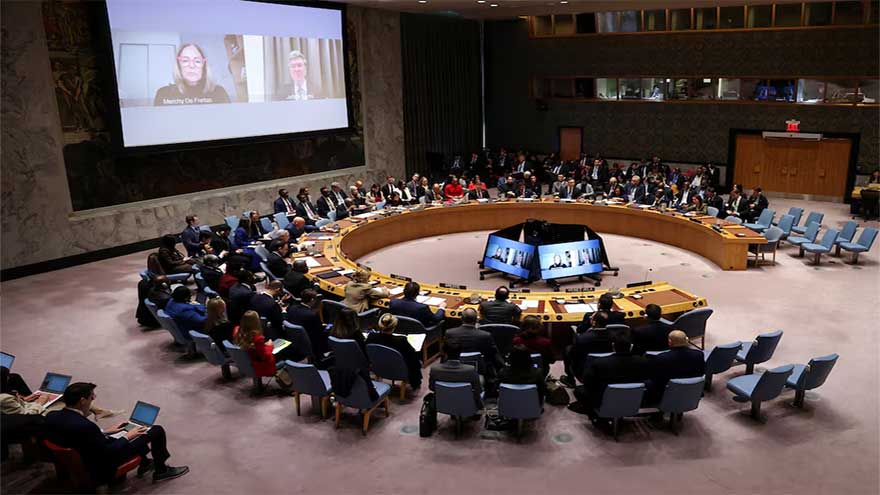
UNITED NATIONS (Reuters) – United Nations Secretary-General Antonio Guterres raised concerns on Monday about greater instability in Venezuela after the US capture of President Nicolas Maduro, while the United States said it does not plan to occupy the Latin American country.
The 15-member Security Council met at UN headquarters in New York just hours before Maduro was due to appear in a Manhattan federal court on drug charges including narco-terrorism conspiracy. Maduro has denied any criminal involvement.
"I am deeply concerned about the possible intensification of instability in the country, the potential impact on the region, and the precedent it may set for how relations between and among states are conducted," Guterres said in a statement delivered to the council by UN political affairs chief Rosemary DiCarlo.
NO OCCUPATION
US Ambassador to the UN Mike Waltz told the Security Council the United States carried out "a surgical law enforcement operation facilitated by the US military against two indicted fugitives of American justice," referring to Maduro and his wife Cilia Flores.
"As Secretary (of State Marco) Rubio has said, there is no war against Venezuela or its people. We are not occupying a country," said Waltz, as he laid out the US case against Maduro at the Security Council.
"We're not going to allow the Western Hemisphere to be used as a base of operation for our nation's adversaries," Waltz said. "You cannot continue to have the largest energy reserves in the world under the control of adversaries of the United States, under the control of illegitimate leaders, and not benefiting the people of Venezuela."
Venezuela's UN Ambassador Samuel Moncada called the US operation to capture Maduro "an illegitimate armed attack lacking any legal justification." Moncada told the council that Venezuelan institutions are functioning normally, constitutional order has been preserved, and the state exercises effective control over all of its territory.
Guterres called on all Venezuelan actors to engage in an inclusive and democratic dialogue, adding: "I welcome and am ready to support all efforts aimed at assisting Venezuelans in finding a peaceful way forward."
INTERNATIONAL LAW
Guterres also expressed concern that the US operation to capture Maduro in Caracas on Saturday did not respect the rules of international law. The UN Charter states that members "shall refrain in their international relations from the threat or use of force against the territorial integrity or political independence of any state."
The United States has cited Article 51 of the UN Charter, which says that nothing "shall impair the inherent right of individual or collective self-defense if an armed attack occurs against a member of the United Nations."
Russia, China and Colombia condemned the US military operation as illegal. Most remaining council members did not directly criticize the United States and instead stated the importance of abiding by international law and the UN Charter.
"Unintelligible murmurings and attempts to avoid principled assessments by those who in other circumstances froth at the mouth and demand that others respect the UN Charter today seem particularly hypocritical and unseemly," said Russia's UN Ambassador Vassily Nebenzia.
Russia has been denounced by the United Nations for its 2022 invasion of Ukraine.
China drew comparisons to the 2003 US-led invasion of Iraq and more recent attacks on Iran's nuclear facilities.
"The lessons of history offer a stark warning," said Sun Lei, the charge d'affaires of China's Permanent Mission to the United Nations. "Military means are not the solution to problems, and the indiscriminate use of force will only lead to greater crises."
Colombia, which requested Monday's meeting, condemned the US operation as a clear violation of the sovereignty, political independence and territorial integrity of Venezuela. Russia, China and Venezuela called on the United States to release Maduro and his wife.
The United States cannot be held accountable by the UN Security Council, which is charged with maintaining international peace and security, for any such violation. The United States wields a veto – along with Russia, China, Britain and France – so it can block any action.
