


Khawaja Asif rebukes India's 'threat rhetoric', cautions against escalation between nuclear powers
Pakistan
Khawaja Asif warns Rajnath Singh that war between nuclear states is inconceivable, amid renewed tensions over India’s remarks and the Pahalgam incident anniversary.

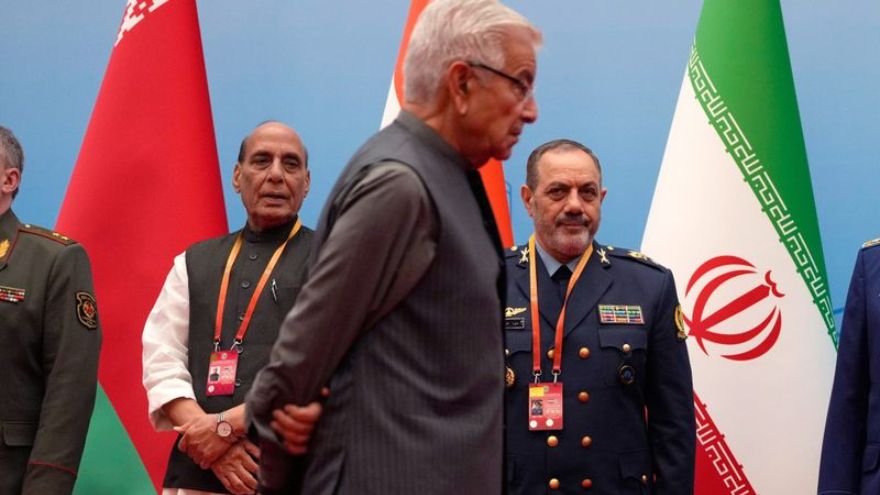
ISLAMABAD (Dunya News) – Defence Minister Khawaja Asif has issued a strong warning to his Indian counterpart Rajnath Singh, stating that any notion of war between two nuclear-armed states is “inconceivable” and fraught with severe consequences, amid renewed tensions triggered by recent remarks from New Delhi.
The statement came on Thursday through a post on X, where Asif criticised what he described as India’s recurring “threat rhetoric”, linking it to what he termed strategic unease ahead of the anniversary of the Pahalgam incident in Indian Illegally Occupied Jammu and Kashmir.
Without directly referencing Singh’s remarks, Asif responded to recent statements attributed to the Indian defence minister in which Pakistan was cautioned against any potential “misadventure” in the context of the ongoing Middle East conflict.
In his post, Asif characterised such rhetoric as reflective not of strength but of “visible strategic anxiety”, alleging that it coincides with the anniversary of what he described as a “staged false flag operation” in Pahalgam. He further claimed that the episode had failed to withstand international scrutiny and exposed what he called New Delhi’s reliance on manufactured crises.
Repeated rhetoric reflects not strength, but visible strategic anxiety as the anniversary of the staged False Flag Operation in Pahlgam approaches - an episode that failed to withstand international scrutiny and exposed New Delhi’s reliance on manufactured crises.
— Khawaja M. Asif (@KhawajaMAsif) April 2, 2026
Such…
The Pahalgam attack, which occurred on April 22 last year, involved gunmen targeting tourists in the region. India attributed the incident to Pakistan without presenting publicly verifiable evidence, leading to heightened tensions and a brief period of military escalation between the two neighbours. Islamabad categorically rejected the allegations at the time and called for an independent and neutral investigation into the incident.
The escalation that followed the attack continued for several weeks before subsiding. Pakistan later referred to the period of conflict, from April 22 to May 10, as “Marka-i-Haq”, or the battle of truth, in official narratives released by the military.
Asif, in his latest remarks, invoked that episode as a warning against miscalculation, stating that past events serve as a reminder of the risks associated with heightened tensions between nuclear-armed states. He asserted that any future response from Pakistan would be “more forceful and decisive”.
Reaffirming Islamabad’s stance, the defence minister stated that Pakistan remains committed to peace and regional stability but emphasised that its resolve to defend sovereignty is absolute. He added that the country’s preparedness is complete and that any response, if required, would be “swift, calibrated, and decisive”.
Addressing Singh directly, Asif reiterated that the idea of limited conflict between nuclear powers is unrealistic and carries grave consequences. He further suggested that India should focus on addressing what he described as growing challenges within its own strategic and diplomatic landscape.
