Summary Khyber Pakhtunkhwa launches Good Governance Roadmap 2.0 with 450 reforms, focusing on digital transformation, public services, climate action and infrastructure development.
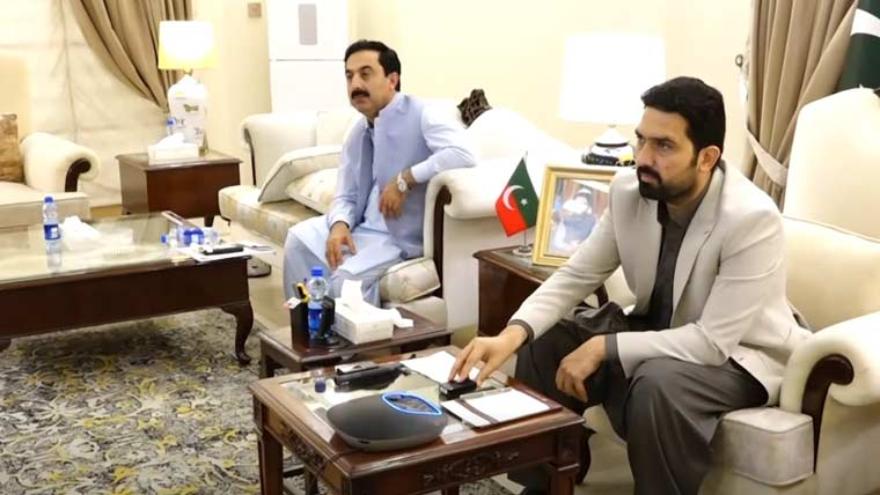
PESHAWAR (Dunya News) – Khyber Pakhtunkhwa Chief Minister Sohail Afridi has formally launched the Good Governance Roadmap 2.0, an expanded reform framework aimed at improving public service delivery and administrative efficiency across the province.
Addressing the launch ceremony, the chief minister announced that the total number of initiatives under the roadmap has been increased from 362 to 450, with the inclusion of 88 new measures spanning 10 additional departments. He stated that the government is directly monitoring the implementation process, adding that delays in public service delivery will be treated as a serious offence.
The roadmap outlines wide-ranging reforms across governance, infrastructure, environment, healthcare, education and public safety. Afridi directed authorities to ensure a safe, welcoming environment for tourists ahead of the upcoming travel season, emphasising improved facilities, better guidance systems and immediate upgrades at key tourist destinations. He also instructed officials to expedite work on the PC-1 for the Nathia Gali Road project on a priority basis.
The provincial government is simultaneously working on introducing an e-challan system, which is expected to streamline vehicle transactions and enable immediate transfer of ownership. Afridi stressed the importance of public awareness campaigns to inform citizens about ongoing reforms, including the new digital systems being rolled out.
Highlighting environmental priorities, the chief minister congratulated the forest department on successfully planting one million saplings on March 23 and called for strict measures to ensure their protection and maintenance. He reiterated that climate change remains a critical challenge and expanding forest cover is a top government priority.
In the transport sector, Afridi directed that work on the circular railway project be initiated on priority, while preliminary work on railway expansion to Khyber district and Mardan should be completed before the next budget cycle.
Officials briefed the chief minister that the new roadmap is expected to significantly enhance governance and service delivery. The introduction of an e-pension system will facilitate faster and more accessible services for retired employees. Meanwhile, land record services under the Board of Revenue will be extended to citizens’ doorsteps through mobile units, with integration of digital land records with NADRA aimed at ensuring transparency and reducing corruption.
Traffic management is also set for improvement through the introduction of a camera-based enforcement system, which will strengthen compliance with road regulations. A dedicated school zone safety package will ensure safer travel for children, while the establishment of smog monitoring systems and climate observatories will enhance air quality tracking.
Environmental safeguards are being strengthened through toxic waste and wastewater monitoring systems designed to mitigate ecological risks. The afforestation drive under the Billion Tree Plus Programme will be expanded further, while the digitalisation of driving licences is expected to improve efficiency and transparency in citizen services.
Under a public-private partnership model, an intercity transport system will be introduced to improve connectivity between districts. Prison reforms include the rollout of telemedicine and health screening services, along with skills development programmes for juvenile inmates aimed at rehabilitation.
The roadmap also includes social protection measures, such as the enforcement of maternity benefits for working women to ensure financial security. Emergency preparedness will be enhanced through the introduction of early warning systems, while GPS tracking in ambulances and rescue vehicles will improve operational transparency and response times.
Officials informed the chief minister that implementation of reforms under the roadmap is already underway in 16 departments, covering 320 initiatives. So far, more than 440 weekly, over 70 monthly and five quarterly review meetings have been conducted to monitor progress. Additionally, over 2,200 action steps have been developed to ensure effective execution of reforms.
In the healthcare sector, 150 basic health units have been made operational round the clock, with the remaining facilities expected to follow by June 2026. A total of 700 doctors have been recruited for BHUs and rural health centres, while approval has been granted for 2,400 medical officers. The polio campaign has been expanded to 45 additional union councils, with access restored to previously inaccessible areas. More than 150 vaccinators have been deployed across over 60 hospitals, alongside the extension of vaccination services into evening shifts.
Municipal authorities have completed the cleaning of 2,500 kilometres of drains and sewerage lines, while a rural waste collection system is now active, collecting approximately 4,500 tonnes of waste each month. In the education sector, more than 100,000 students have been provided with furniture, and 3,500 students have received scholarships.
Agricultural reforms include the conversion of 150,000 wild olive trees into productive varieties. Under social welfare initiatives, monthly stipends are being provided to over 3,000 orphaned children and more than 3,000 widows.