


Rapid population growth straining Pakistan's resources: experts
Pakistan
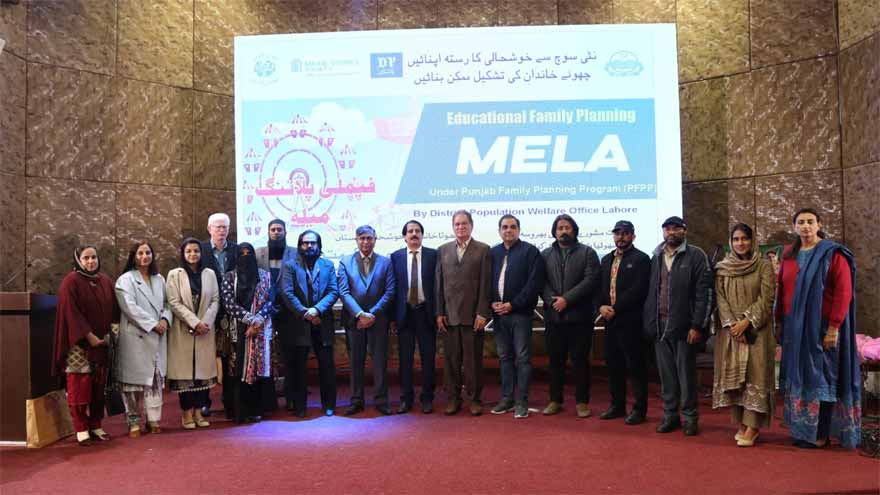
Health experts, civil society representatives, artists and families gathered at the Punjab Institute of Language, Art and Culture (PILAC) for the Educational Family Planning Mela

LAHORE (Web Desk) - Health experts, civil society representatives, artists and families gathered at the Punjab Institute of Language, Art and Culture (PILAC) for the Educational Family Planning Mela 2025, where speakers warned that Pakistan’s rapidly growing population was placing unsustainable pressure on the country’s resources and public services.
Organised by the Health and Population Department of Punjab in collaboration with the Marie Stopes Society, the event focused on promoting family planning awareness under the theme “Balanced Family, Prosperous Pakistan and Our Collective Responsibilities.”
Trained health staff provided information and services related to permanent family planning methods, long-acting reversible contraceptives and other reproductive health facilities.
Free medical procedures and medicines were also offered, while cultural performances and local music were presented for participants.
Senior journalist Mujeebur Rahman Shami and District Population Welfare Officer Mazhar Iqbal inaugurated the event.
Speaking on the occasion, Mujeebur Rehman Shami expressed concern over the country’s accelerating population growth, saying it had reached a critical stage and was exerting pressure on sectors such as education, health and social services.
He stressed that sustainable development was not possible without maintaining a balanced population and urged collective action from all segments of society.
He also acknowledged the efforts of the Health and Population Department and the Marie Stopes Society and called for stronger government and donor support to strengthen their work.
Population surge poses serious threat, says Attaullah Tarar
District Population Welfare Officer Mazhar Iqbal said that the global population had crossed 8 billion, while resources were increasingly insufficient to ensure a decent standard of living.
He said that maintaining a balance between population growth and available resources was essential for Pakistan’s long-term development.
He added that the Health and Population Department was engaging religious scholars, teachers, media professionals and youth to promote awareness about population management, noting that maternal and child health remained a key priority.
Regional Manager of the Marie Stopes Society Aamir Yousaf said that Pakistan ranked fifth globally in terms of population, despite limited resources to provide basic services such as clean drinking water, healthcare, education and balanced nutrition.
Citing a report, he said one woman dies every 50 minutes in Pakistan due to pregnancy or childbirth-related complications, emphasising that birth spacing was crucial to reducing maternal mortality.
Yousaf expressed hope that effective population control could help Pakistan improve its ranking on the Human Development Index.
