


Melody queen Noor Jehan remembered
Entertainment
Her patriotic songs became anthems of courage, resistance and spiritual armor for soldiers and civilians of Pakistan

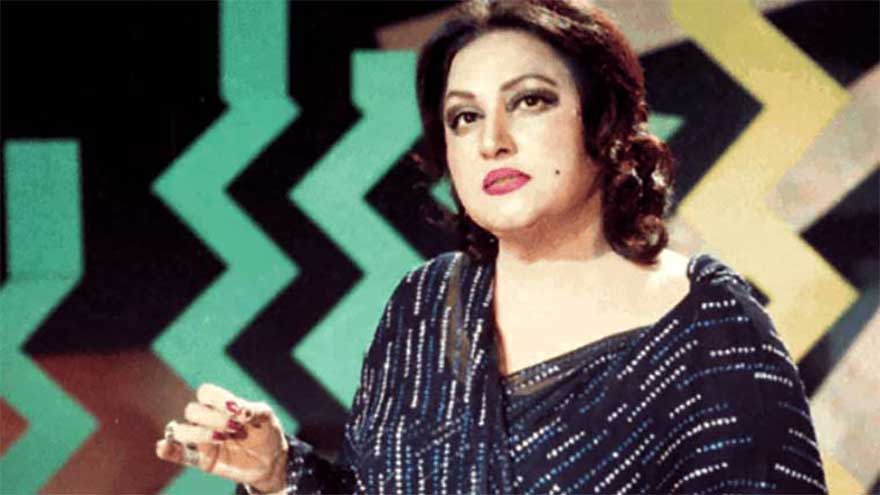
LAHORE (Dunya News) – It is 25 years since the death of legendary singer Malka-e-Tarannum Noor Jehan and fans are observing her death anniversary on Tuesday (today).
Noor Jehan was born in Kasur‚ Punjab on September 21‚ 1926 in a family of musicians.
She recorded about 10‚000 songs in various languages of Pakistan and India including Urdu‚ Punjabi and Sindhi.
Noor Jehan was the voice that injected spirit into the Pakistan Army and the public during the 1965 war with India.
In 1957‚ Noor Jehan was awarded the President’s Award for her acting and singing capabilities.
She also earned the Special Nigar Award, Pride of Performance, Life Time Achievement Award, Sitara-e-Imtiaz, PTV Life Time Achievement Award, and Millennium Award.
Apart from singing, she also exhibited her talent as an actor in films including Chan Way, Dopatta, Mirza Ghalib, Qaidi, Baaji and Khandaan.
Noor Jehan died on December 23, 2000 due to heart failure and was buried in Karachi.
She stirred nation’s soul in 1965 War
On September 6, 1965, as the drums of war echoed along Pakistan’s eastern borders, the voice of a single woman soared above the din of conflict, carrying with it a message of hope, unity, and unwavering courage.
That iconic woman was Madam Noor Jehan also known as Malika-e-Tarannum, the Melody Queen of Pakistan, whose patriotic songs became anthems of courage, resistance and spiritual armor for soldiers and civilians of Pakistan.
Her songs infused a new spirit in our armed forces and gave courage to an under attacked nation.
While many artists, including Ghazal maestro Mehdi Hassan, Alam Lohar, and Saleem Raza, lent their voices to the national cause, but it was Noor Jehan’s soul-stirring melodies that cut across ranks, borders and regions.
Her powerful renditions like “Ae Watan ke Sajiley Jawano,” “Ae Puttar Hattan Te Nahi Wikde,” and “Rah-e-Haq Ke Shaheedo” were not just songs rather they were a call to arms, a mother’s prayer, a sister’s tribute.
These songs poured from radios across cities and villages, echoing in homes, mess halls, and trenches. They moved listeners to tears and gave soldiers the strength to march forward with pride and resolve.
