


Petrol hits Rs458.40, diesel Rs520.35 as Pakistan sees highest ever fuel price hike
Business
Pakistan raises petrol to Rs458.40 and diesel to Rs520.35 in a record hike, announcing targeted subsidies and energy-saving measures amid global oil crisis.

ISLAMABAD (Dunya News) – Pakistan has announced an unprecedented increase in petroleum product prices, pushing petrol to Rs458.40 per litre and high-speed diesel to Rs520.35 per litre, marking the highest rates in the country’s history.
The announcement was made during a joint press conference by Federal Minister for Petroleum Ali Pervaiz Malik and Federal Minister for Finance Muhammad Aurangzeb.
The revised prices, which come into effect from midnight, reflect an increase of Rs137.23 per litre for petrol and Rs184.49 per litre for diesel. Officials described the move as unavoidable in light of escalating global oil prices driven by the ongoing conflict in the Middle East.
Speaking at the briefing, the petroleum minister revealed that a high-level meeting chaired by the Prime Minister was held earlier in the day, attended by chief ministers, military leadership and other key stakeholders. The participants reviewed the evolving global energy situation and agreed that subsidies could no longer be extended universally.
Ali Pervaiz Malik said Pakistan imports nearly 90 percent of its oil from markets in Dubai and Oman, where prices have surged sharply in recent days. He noted that diesel prices in international markets have crossed $250 per barrel, placing extraordinary pressure on domestic pricing.
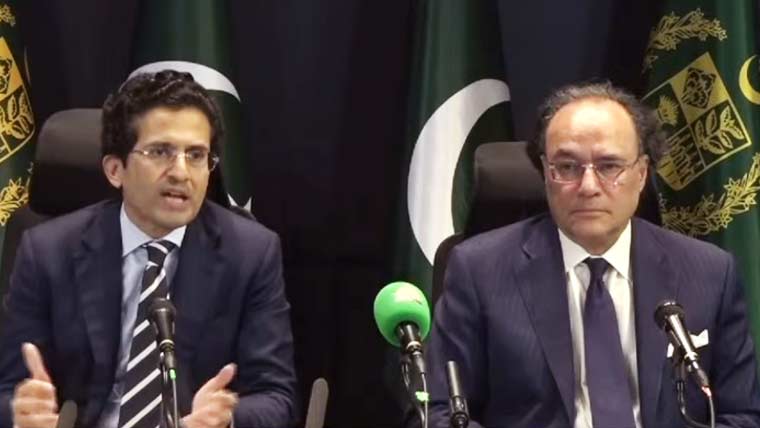
The minister stressed that the volatility in global oil markets has created a challenging environment, adding that the current situation demands unity and discipline at the national level. He maintained that the government had not contributed to the global crisis but is now compelled to take difficult decisions to safeguard economic stability.
Highlighting recent efforts, he said the government had already implemented austerity measures, including cuts in cabinet salaries and development spending, in an attempt to shield the public from the full impact of rising costs. According to officials, Rs129 billion has been spent since 1 March to provide relief to consumers.
Fuel subsidy
Despite these measures, authorities acknowledged that continuing broad-based subsidies would risk reversing economic gains made over the past two years. The minister indicated that Pakistan must avoid returning to unsustainable fiscal practices, particularly in the context of commitments made to the International Monetary Fund.
The government has instead opted to introduce targeted relief measures aimed at specific segments of society. Finance Minister Muhammad Aurangzeb announced a three-month subsidy package for motorcycle riders, under which they will receive Rs100 per litre subsidy on up to 20 litres of petrol per month.
Additional support has also been extended to other sectors. Small farmers will receive a one-time subsidy of Rs1,500 during the crop harvesting period. Public transport and logistics operators are also included in the relief package, with intercity passenger vehicles and goods transport vehicles receiving Rs100 per litre subsidy.
For freight operators, monthly subsidies have been set at Rs70,000 for standard cargo trucks and Rs80,000 for larger freight vehicles. Passenger buses will receive up to Rs100,000 per month in support, aimed at mitigating fare increases for commuters.
Pakistan records 13pc rise in fuel sales despite conservation measures
The finance minister further stated that Pakistan Railways will also be provided with subsidies to ensure affordable travel for lower-income passengers. He added that the government would review the subsidy framework after one month to assess its effectiveness and make necessary adjustments.
Energy conservation
In a parallel energy conservation measure, the government has decided to revise market operating hours, encouraging daytime business activity to reduce electricity consumption and fuel usage. Final timings will be determined in consultation with provincial governments and are expected to be announced within the coming week.
Officials reiterated that while the price increase would inevitably place additional strain on households and businesses, it was necessitated by extraordinary global circumstances and the country’s economic commitments.
