


Pakistan shifts focus from aid to trade, investment-led growth: Finance minister
Business
Pakistan economy, Finance Minister Muhammad Aurangzeb, GCC countries, trade and investment, IMF, macroeconomic reforms, tax reforms, foreign direct investment, remittances, economic growth

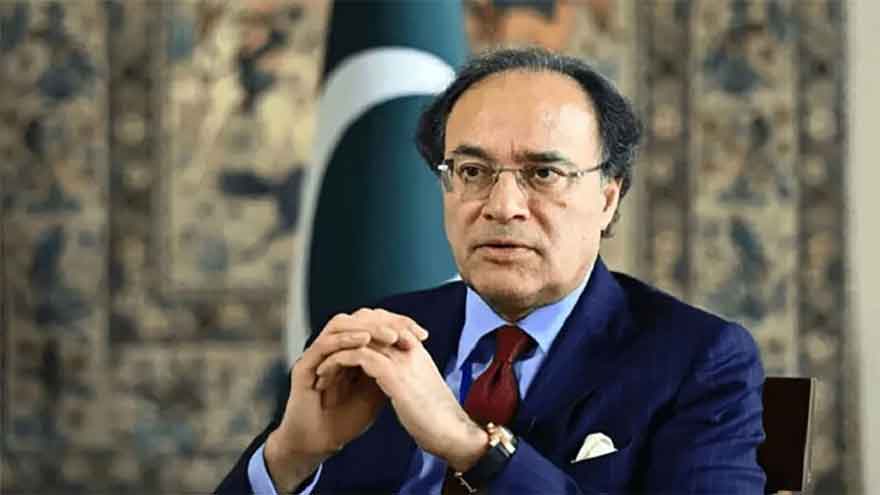
ISLAMABAD (Dunya News) – Finance Minister Muhammad Aurangzeb highlighted Pakistan’s strategic shift from aid dependence to trade- and investment-led engagement to ensure long-term economic sustainability, particularly with GCC countries.
Speaking to CNN Business Arabia, Aurangzeb emphasized Prime Minister Shehbaz Sharif’s vision of renewed economic confidence and reform momentum.
He noted that Pakistan’s 18-month macroeconomic stabilisation programme has delivered tangible results, reducing inflation from 38% to single digits, achieving primary fiscal surpluses, stabilising the exchange rate, and improving foreign reserves to cover 2.5 months of imports.
Aurangzeb pointed to international validations of Pakistan’s improving economic outlook, including upgrades by all three major credit rating agencies and the completion of the IMF Extended Fund Facility’s second review.
The minister outlined reforms across key sectors including taxation, energy, state-owned enterprises, public financial management, and privatisation, aimed at consolidating stability and promoting sustainable growth. Pakistan’s tax-to-GDP ratio rose to 10.3%, with a target of 11%, through broadening the tax base, improving compliance, and leveraging AI-enabled systems.
Efforts are also underway to reform power distribution companies, rationalize tariffs, involve private sector expertise, advance privatisation, and reduce circular debt—measures seen as vital for industrial revival and economic growth.
Aurangzeb acknowledged longstanding support from GCC countries, noting that remittances reached $38 billion last year, over half from the GCC, and are expected to rise to $41-42 billion. He highlighted Pakistan’s active engagement with GCC partners to attract investment in energy, oil and gas, minerals, AI, digital infrastructure, pharmaceuticals, and agriculture, with Free Trade Agreement discussions at an advanced stage.
The finance minister concluded that Pakistan’s future lies in fostering trade and investment partnerships rather than relying on aid, stressing that foreign direct investment will drive higher GDP growth, create jobs, and deliver shared economic benefits.
Finance Minister Muhammad Aurangzeb highlighted Pakistan’s shift from aid to trade- and investment-led growth. Macroeconomic reforms reduced inflation, improved fiscal stability, and attracted GCC investment. Remittances rose to $38 billion, with FDI and Free Trade Agreement discussions underway.
