


FinMin calls for equitable global financial reforms
Business
He represents Pakistan at Fourth International Conference on Financing for Development in Spain

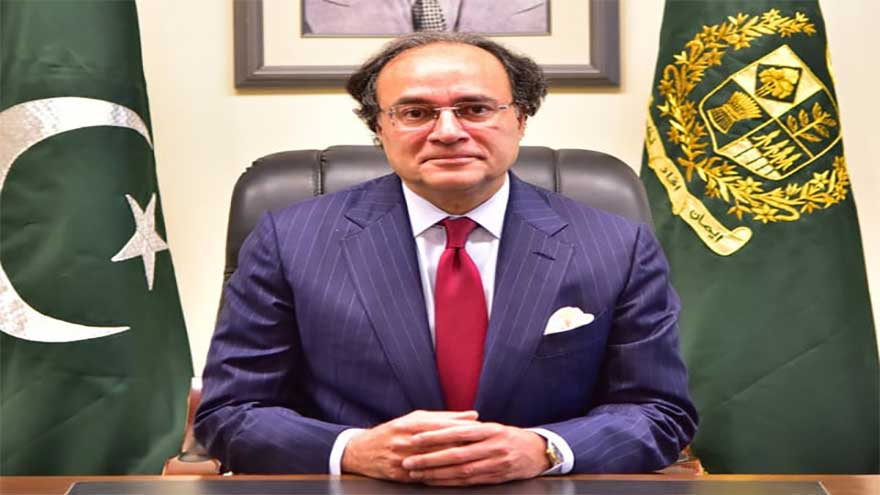
ISLAMABAD (APP) - Federal Minister for Finance and Revenue, Senator Muhammad Aurangzeb, called for equitable global financial Reforms and Scaled-Up Development Support at FFD4 Conference in Spain.
Federal Minister for Finance and Revenue, Senator Muhammad Aurangzeb, represented Pakistan at the plenary session of the Fourth International Conference on Financing for Development (FFD4) held in Sevilla, Spain, said a release issued here on Tuesday.
The conference, convened to address the widening gap in financing for sustainable development, served as a global platform for countries to present national perspectives and outline their contributions and expectations regarding sustainable development financing.
In his address to the conference, Senator Aurangzeb articulated Pakistan’s priorities, challenges, and reform efforts, while calling for urgent and coordinated global action to strengthen the international financial architecture in line with the principles of equity, solidarity, and inclusivity.
The Finance Minister acknowledged the scale of global challenges currently facing developing countries and pointed to a confluence of pressures—deepening debt vulnerabilities, accelerating climate impacts, and the reversal of hard-won development gains—that have further widened the global SDG financing gap.
He stressed that while the Monterrey, Doha, and Addis Ababa conferences laid the foundations of a more inclusive global financial system, much remains to be done to translate those commitments into effective mechanisms that deliver tangible support to countries most in need.
Senator Aurangzeb welcomed the renewed resolve demonstrated through the ‘Compromiso de Sevilla’ and appreciated its practical and forward-looking proposals.
These include pledges to double support for domestic resource mobilisation, reverse aid cuts, increase concessional financing through new metrics beyond GDP, expand the lending capacity of multilateral development banks, scale up local currency lending, and re-channel unutilised Special Drawing Rights (SDRs) through structured frameworks.
He called for early implementation of these commitments, particularly in the area of debt reform, including the establishment of an institutional platform for liquidity and debt management support, the creation of a borrower-focused platform to elevate the voice of developing countries, and the initiation of an intergovernmental process under the UN to address gaps in the existing debt architecture.
The Minister informed the global audience that Pakistan, despite facing multiple external shocks ranging from pandemics to climate-induced disasters, is undertaking robust domestic reforms to align with global aspirations.
He outlined Pakistan’s new five-year National Economic Transformation Plan, titled ‘Uraan Pakistan,’ which rests on five pillars: Exports, E-Pakistan, Environment, Energy and Infrastructure, and Equity.
He noted that through consistent macroeconomic measures, Pakistan has achieved a primary budget surplus, reduced inflation, and lowered its debt-to-GDP ratio.
Further, the country is enhancing domestic resource mobilisation through tax base expansion, digitalisation of tax administration, and improvements in public financial management, with a goal to raise the tax-to-GDP ratio to over 13% in the medium term.
Senator Muhammad Aurangzeb also highlighted Pakistan’s efforts in expanding access to green and Islamic finance, deepening financial inclusion through digital infrastructure, and attracting foreign direct investment through a new investment policy and the Special Investment Facilitation Council. These efforts, he emphasized, reflect Pakistan’s determination to transform policy into performance, despite external constraints.
