
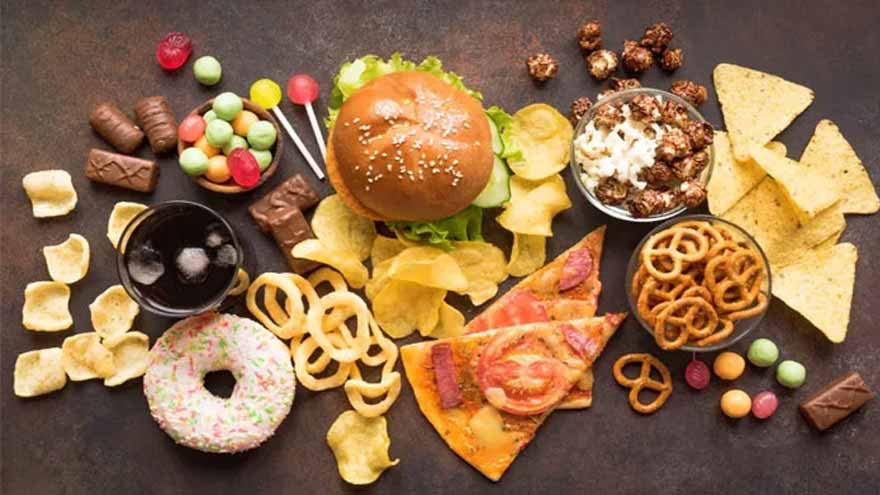
Summary Ultra-processed foods include items that undergo extensive industrial processing.
(Web Desk) - A new study has found that excessive consumption of ultra-processed foods significantly raises the risk of heart attacks and strokes, with scientists warning that such dietary habits could increase the likelihood of death from cardiovascular diseases by up to 67%.
Ultra-processed foods include items that undergo extensive industrial processing and contain additives such as preservatives, artificial sweeteners, and flavor enhancers. Common examples include chips, biscuits, ready-made meals, ice cream, and packaged bread..jpg)
According to the research, conducted by experts at the American College of Cardiology, consuming around nine servings of ultra-processed foods daily can increase the risk of heart attack, stroke, or sudden cardiac arrest by as much as 67%. Each additional serving further raises the risk by approximately 5%..jpg)
Lead researcher Amir Hayder, a cardiology fellow at the University of Texas Health Science Center, stated that while these foods are convenient, their frequent consumption is strongly linked to a higher risk of heart disease, Type 2 Diabetes, and obesity.
The study, based on data from nearly 7,000 adults in the United States collected between 2000 and 2012, categorized foods using the NOVA classification system, which divides food into unprocessed, minimally processed, processed, and ultra-processed groups.
Researchers found that individuals with the highest intake consumed an average of 9.3 servings per day, compared to just 1.1 servings among low consumers. Those with higher consumption levels showed a significantly greater risk of heart attack, stroke, or sudden cardiac arrest.
Experts emphasized that the risk remains elevated regardless of total calorie intake or overall diet quality, highlighting that the level of food processing itself plays a crucial role in health outcomes.
They advised people to monitor not only how much they eat but also how processed their food is. Ingredients such as high-fructose corn syrup, artificial colors, flavors, and preservatives — often found in foods with long shelf lives — are key indicators of ultra-processed items.
However, experts noted that not all processed foods are harmful. Some, such as whole-grain bread and hummus, can still be part of a balanced diet when consumed in moderation.